
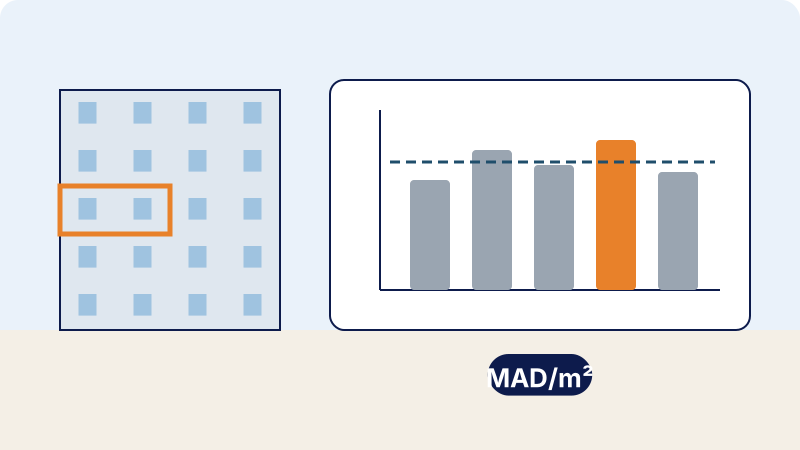
Your situation
- Heirs need to know the value of a property at the date of the inheritance.
- You are selling or buying and want a reasoned price.
- A partition, a contribution to a company or a dispute requires an independent value.
- A bank or a third party requests a valuation of the property.
Which value are we talking about?
The valuation most often concerns the market value: the price at which the property could be exchanged, at a given date, between a willing buyer and a willing seller, both informed and acting without pressure, after normal marketing. It differs from a value of convenience, influenced by the particular motivation of one party.
The valuation date may precede the report: this is often the case for an inheritance, where the value is requested at the date of the succession.
How the valuation proceeds
- Administrative phase: verification of the legal and cadastral situation of the property — property certificate, cadastral file, co-ownership plans, any encumbrances or operations in progress.
- Field phase: visit of the property and its surroundings, description of its characteristics (area, floor, orientation, condition, fittings), photographic record.
- Market study: recent transactions and sale and rental offers in the area, and trends published in the real estate asset price index (IPAI) of Bank Al-Maghrib and the ANCFCC (National Agency for Land Registry, Cadastre and Cartography).
- Analysis of the strengths and weaknesses of the property and its market.
- Valuation using one or more methods, then synthesis and certificate of value.
Valuation methods
Direct comparison
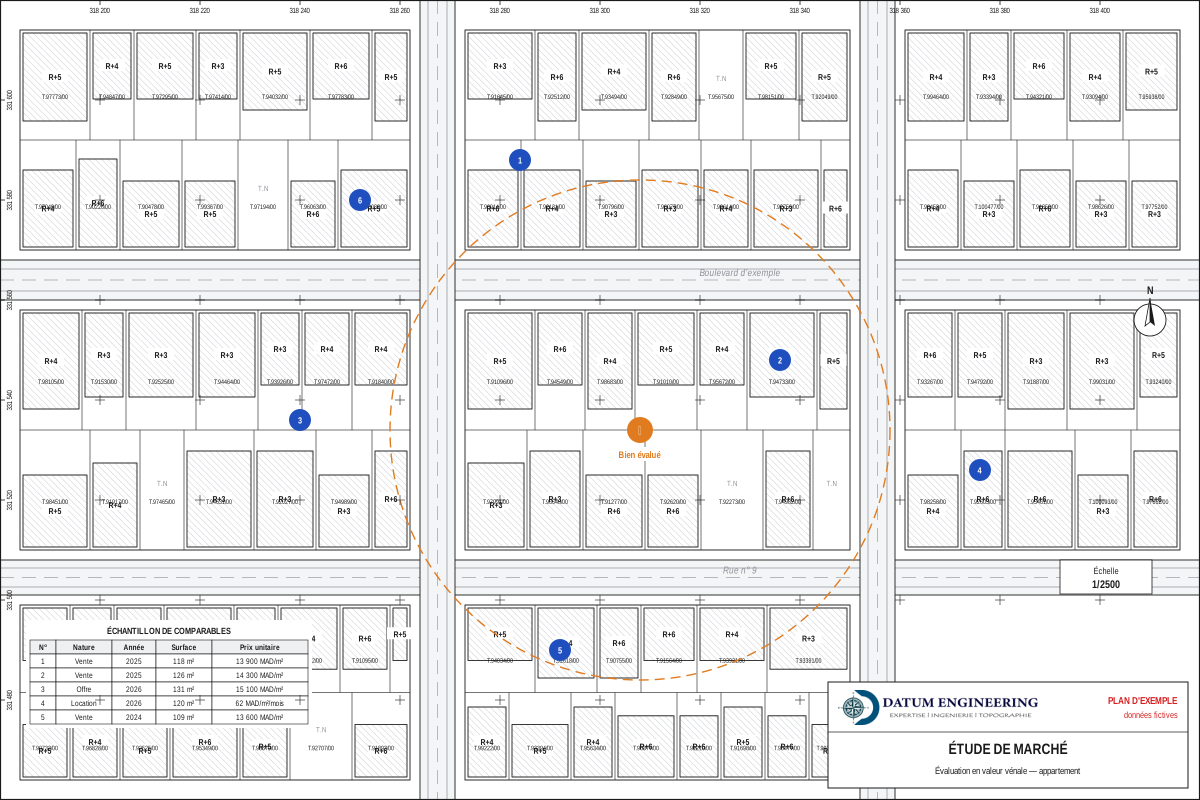
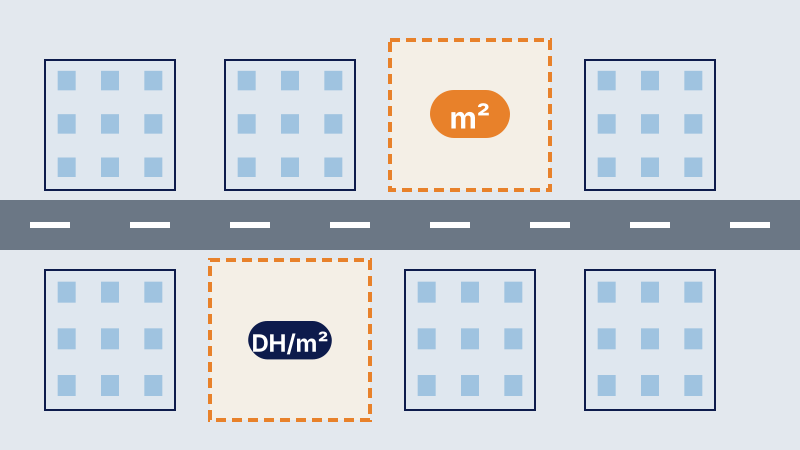
The value is derived from the price of properties as similar as possible, selected on a threefold similarity: in time (recent transactions), in space (same area, same market rules) and physical (area, floor, condition). The value is written V = v × n: a unit value, in MAD/m², multiplied by the area, generally a weighted area (balconies, terraces and outbuildings counted for a fraction).
Income capitalisation
Suited to properties that produce or could produce a rent: V = R / t, where R is the annual income and t a capitalisation rate derived from the market.
When the methods converge, the value adopted may combine their results, with an explanation of that choice.
The report delivered
- the terms of the assignment, the documents consulted and the dates of the visit and of the valuation;
- the legal and physical description of the property, with a photographic record;
- the market study and the sample of comparables;
- the detail of the calculations, the assumptions and the reservations (property assumed to be in a regular situation, free of encumbrances…);
- the certificate of value, recalling the legally enforceable area, that of the land title.
Frequently asked questions
Can a property be valued at a past date?
Yes. The valuation date is set according to the need, for example the date of an inheritance; the market study takes it into account.
Which area is used?
The calculations often use a weighted area; the certificate recalls the area of the land title, which is legally enforceable.
Is an interior visit necessary?
It is recommended. Without an interior visit, the report states this and the value is given with a reservation.
Other useful guides
 Tax on undeveloped land (TNB): what Law 14-25 changesTax on undeveloped urban land: Law 14-25 rates, zones, exemptions and computation of the taxable area by a land surveyor.
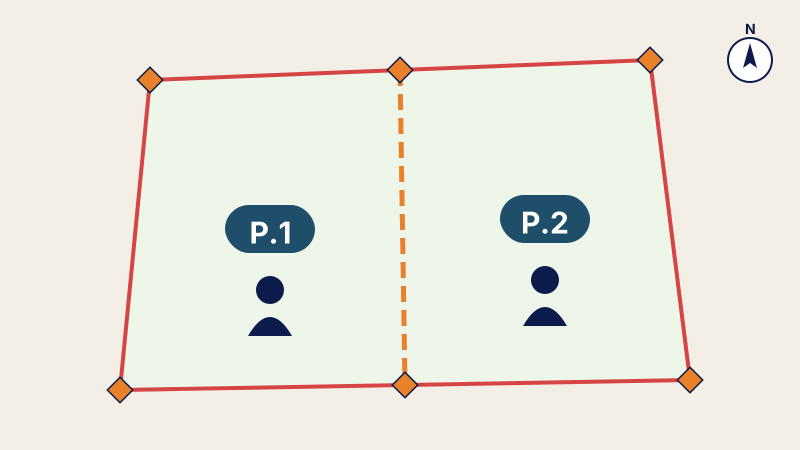 Partition plan: dividing land between heirs or partnersEnding joint ownership: partition plan of a plot between heirs or partners, equivalent lots, land division and new land titles.
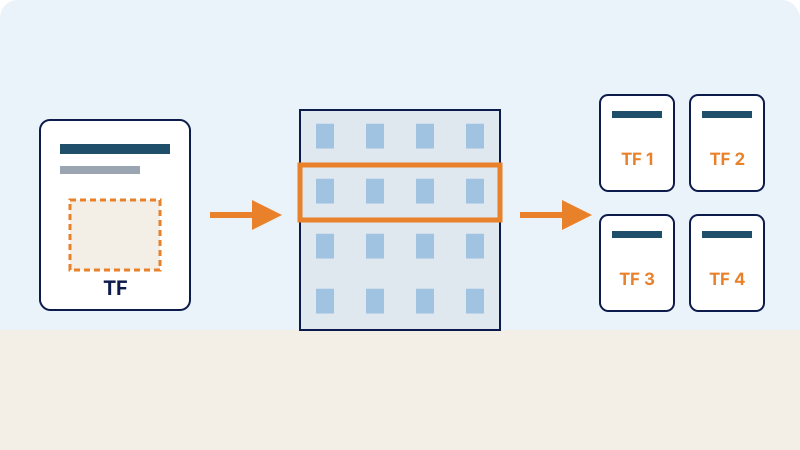 Title reconciliation and co-ownership: how to obtain a land title for each apartmentLand title still describing bare land? Title reconciliation, co-ownership (Law 18-00): steps, documents and the land surveyor's role.
Written by the surveying engineers of DATUM ENGINEERING, a firm registered on the roll of the ONIGT (National Order of Surveying Engineers).
General information article, based on the standards of the ONIGT (National Order of Surveying Engineers) and the ANCFCC (National Agency for Land Registry, Cadastre and Cartography) and on the texts in force on the date of update. It does not replace an examination of your file.